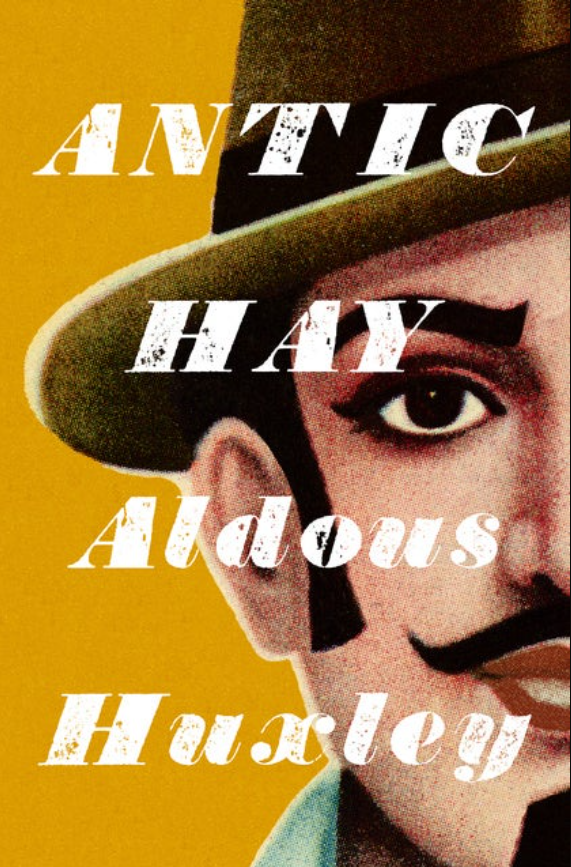
Antic Hay
The Book link is given below:
When it comes to exploring the confusion, disillusionment, and moral uncertainty of post–World War I Europe, few novels capture the mood as vividly as Antic Hay by Aldous Huxley. Published in 1923, this satirical novel offers a fascinating glimpse into a world trying to rebuild itself after chaos—a world where art, love, and intellect struggle to find meaning in a rapidly changing society. Blending sharp wit, deep philosophical insight, and playful irony, Antic Hay stands as one of Huxley’s most thought-provoking and entertaining works. For readers who love classic literature that challenges convention, this masterpiece is a must-read—and you can easily find Antic Hay available as a free PDF book online.
The World After War
The 1920s were an era of transformation. Europe was still reeling from the devastation of the First World War, and the younger generation was left searching for purpose and identity. This is the cultural and emotional backdrop against which Antic Hay unfolds. The novel vividly captures the restlessness and cynicism of the so-called “Lost Generation,” who found themselves caught between old traditions and new freedoms.
Huxley, known for his keen observation of human behavior, paints a world filled with artists, intellectuals, and dreamers—all seeking meaning in pleasure, philosophy, and art. The novel’s title itself, taken from Christopher Marlowe’s Doctor Faustus, symbolizes youthful mischief and aimless dancing—an apt metaphor for a generation struggling to make sense of life after the war.
The Story and Its Characters
At the center of Antic Hay is Theodore Gumbril Jr., a disillusioned academic who feels trapped in his dull teaching career. Tired of routine and longing for excitement, he invents the “Patent Small-Clothes”—a humorous invention for more comfortable trousers—and leaves his job to seek adventure in London’s vibrant social circles.
Through Gumbril’s encounters with eccentric artists, bohemian thinkers, and shallow socialites, Huxley explores themes of alienation, desire, and the search for authenticity. Each character represents a different aspect of post-war disillusionment: the emptiness of modern love, the conflict between intellect and emotion, and the growing divide between art and real life.
Despite the often cynical tone, Huxley’s humor keeps the story lively. His sharp dialogue, filled with irony and absurdity, makes readers laugh even as they recognize the painful truths beneath the comedy.
Themes of Modernity and Disillusionment
Antic Hay is not just a story—it’s a mirror reflecting the emptiness of an age obsessed with progress but lacking direction. Huxley uses his characters to question the values of modern society: What happens when science replaces faith, pleasure replaces purpose, and intellect replaces compassion?
Through Gumbril and his circle, Huxley portrays a generation disconnected from both past and future—a society where love has become mechanical, art has become pretentious, and philosophy has lost its soul. Yet, beneath the satire lies a subtle yearning for meaning, for something real in a world that feels increasingly artificial.
This blend of humor and melancholy is what makes the novel timeless. Even today, its themes resonate with readers who see parallels between the 1920s and the present era—both marked by rapid change, uncertainty, and the struggle to find identity in a complex world.
Huxley’s Unique Writing Style
Aldous Huxley’s writing in Antic Hay is as intelligent as it is entertaining. His prose sparkles with wit, his dialogue feels alive, and his descriptions of London’s artistic circles are both poetic and biting. Unlike heavy-handed moralists, Huxley never preaches. Instead, he lets readers draw their own conclusions through irony, satire, and character contrast.
You can also see the early signs of the philosophical curiosity that later defined Huxley’s most famous works, such as Brave New World and Eyeless in Gaza. In Antic Hay, he explores ideas about individual freedom, creativity, and the role of intellect in shaping human destiny—ideas that would continue to evolve throughout his career.
Why You Should Read or Download Antic Hay
For lovers of classic literature, Antic Hay is a treasure. It’s not only a brilliant piece of social satire but also a historical snapshot of the post-war era. Reading it today feels like stepping into a time when artists, poets, and philosophers tried to rebuild civilization through conversation, creativity, and criticism.
What makes the novel even more appealing is its accessibility. Huxley’s humor and engaging storytelling make even complex ideas enjoyable. Whether you’re a student, a literature enthusiast, or someone exploring early modernist works, Antic Hay offers a rich reading experience that’s both intellectually stimulating and emotionally relatable.
The novel is now part of the public domain, making it easy to download Antic Hay as a free PDF book and enjoy it at your own pace. It’s a perfect addition to your digital library if you love books that make you think deeply while keeping you entertained.
Final Thoughts
Antic Hay remains one of Aldous Huxley’s most insightful and underrated works—a satirical portrait of an age caught between hope and despair. Through humor, irony, and unforgettable characters, Huxley captures the spirit of a generation that dared to question everything, yet struggled to find meaning in the answers.
Comments (0)